

Call us: +86-13857761200

Email us:[email protected]
 Get a quote

 EN
EN 
 English
 中文简体
中文简体 Español
 русский
Submit feedback
Industry News
 Home / News / Industry News / Understanding Stainless Steel Valves: Electric, Pneumatic, and Hydraulic Applications
 Understanding Stainless Steel Valves: Electric, Pneumatic, and Hydraulic Applications
 2025.11.03
 Industry News
Stainless steel valves play a crucial role in controlling the flow of liquids and gases across a wide range of industrial systems. Their inherent resistance to corrosion, high strength, and durability make them suitable for various applications, including chemical processing, water treatment, oil and gas, and food and beverage industries. Among the different valve technologies, the methods used to operate these valves significantly influence their performance, efficiency, and suitability for specific applications. Electric, pneumatic, and hydraulic actuations are three widely adopted methods for controlling stainless steel valves. Understanding their characteristics, advantages, and applications is essential for engineers and facility managers aiming to design reliable and efficient fluid systems.
Advantages of Electric Stainless Steel Valves
Electric stainless steel valves utilize electrical energy to operate valves. These stainless steel valves can convert electrical signals into mechanical motion, enabling precise control of valve positions. Electric actuated stainless steel valves are often chosen in applications where accurate control is required, and where the system allows for an electrical power source.
Electric stainless steel valves are automated valves operated using electrical actuators. They provide precise control of fluid flow in industrial systems, enabling remote operation and integration with control networks. Commonly used in water treatment, chemical processing, and manufacturing, they offer reliable performance, accurate modulation, and enhanced operational safety.
One key advantage of electric stainless steel valves is their ability to provide precise modulation. For example, in water treatment plants or chemical processing systems, maintaining specific flow rates or pressures is critical. Electric stainless steel valves can adjust the valve opening gradually, allowing fine control over flow conditions. Additionally, electric valves can be integrated into automated control systems, including supervisory control and data acquisition (SCADA) platforms, enabling remote monitoring and adjustment.
Electric stainless steel valves can be configured for different types of stainless steel valves, such as ball valves, butterfly valves, and globe valves. They often include feedback systems that report the valve’s position, enhancing safety and operational reliability. While electric stainless steel valves may require higher initial investment and careful consideration of power availability, their precision and ease of integration make them a practical choice for many industrial applications.
Features of Pneumatic Stainless Steel Valves
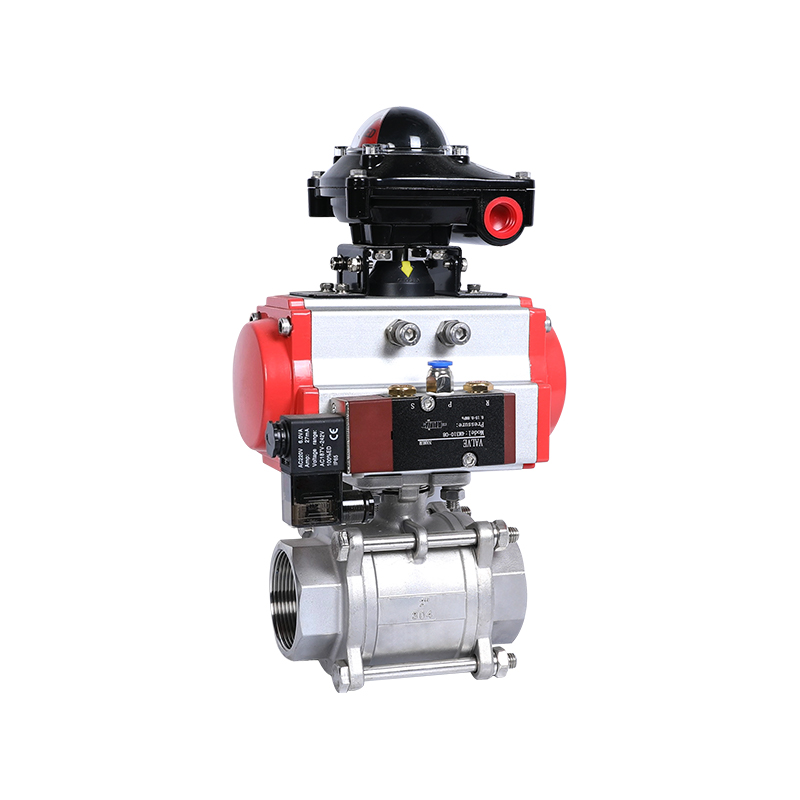
Pneumatic stainless steel valves operate using compressed air to move the valve mechanism. Pneumatic stainless steel valves are commonly used in industries where compressed air is readily available, and where quick valve response is necessary. They are suitable for both on-off and modulating applications.
A notable feature of pneumatic stainless steel valves is their speed. Pneumatic valves can open or close much faster than manual or electric actuated valves, making them suitable for processes that require rapid response to changing conditions. Additionally, pneumatic systems are often considered safer in environments where electrical sparks could pose a risk, such as chemical or petrochemical plants.
Pneumatic stainless steel valves can be designed with spring-return mechanisms or double-acting mechanisms. Spring-return stainless steel valves use a spring to return the valve to a default position when air pressure is removed, which can provide fail-safe functionality in critical systems. Double-acting stainless steel valves, on the other hand, use air pressure for both opening and closing the valve, allowing more precise control over valve movement. The choice between spring-return and double-acting depends on the application requirements and safety considerations.
Benefits of Hydraulic Stainless Steel Valves
Hydraulic stainless steel valves use pressurized fluid, usually oil, to operate stainless steel valves. Hydraulic systems are particularly useful in applications where high force is required, such as in large-diameter valves or systems operating under high pressure.
One advantage of hydraulic stainless steel valves is their ability to deliver substantial torque with relatively compact components. This characteristic makes them suitable for heavy-duty valves where electric or pneumatic stainless steel valves may not provide sufficient force. Hydraulic stainless steel valves also offer smooth operation and can handle frequent cycling without significant wear, making them reliable for continuous or demanding processes.
Hydraulic stainless steel valves are commonly found in industries such as power generation, oil and gas pipelines, and large-scale water distribution systems. The hydraulic system can be controlled manually or through automated systems, offering flexibility in operation. While hydraulic systems may require more complex maintenance due to the use of fluid and pumps, they provide reliable performance in conditions where other actuator types might struggle.
Comparing Electric, Pneumatic, and Hydraulic Valves
Choosing the appropriate actuation method for stainless steel valves depends on multiple factors, including operational requirements, environmental conditions, and system design. Electric stainless steel valves are ideal for applications requiring precise control and remote integration, while pneumatic stainless steel valves excel in rapid response scenarios and environments where electrical components may pose risks. Hydraulic stainless steel valves provide the force needed for large or high-pressure valves and are often chosen for heavy-duty applications.
Another consideration is energy efficiency. Electric stainless steel valves consume power only when moving the valve, whereas pneumatic systems rely on continuous compressed air supply, and hydraulic systems require pumps to maintain pressure. Maintenance requirements also vary: electric stainless steel valves typically need periodic inspection of mechanical and electrical components, pneumatic systems require monitoring of air quality and seals, and hydraulic systems demand fluid checks and leak prevention.
Applications Across Industries
Stainless steel valves with electric, pneumatic, and hydraulic actuation are used in a broad range of industries. In water and wastewater treatment, precise flow control provided by electric stainless steel valves ensures proper chemical dosing and filtration processes. Pneumatic actuated valves are widely used in chemical and food processing facilities, where rapid valve action and safety considerations are important. Hydraulic stainless steel valves are often employed in oil and gas, power generation, and large-scale manufacturing, where high torque and durability are required.
Additionally, stainless steel’s resistance to corrosion and high temperature makes these valves suitable for aggressive media and demanding environmental conditions. The combination of appropriate actuation and stainless steel material allows systems to operate reliably while small downtime and maintenance costs.
Conclusion
Electric stainless steel valves provide precise control and easy integration, pneumatic stainless steel valves deliver rapid response and safety in potentially hazardous environments, and hydraulic stainless steel valves offer the force and reliability required for heavy-duty applications. By carefully evaluating system requirements, environmental conditions, and operational goals, engineers can select the more suitable stainless steel valve and actuation method, ensuring good performance and longevity in industrial applications.

CONTACT INFO
 [email protected]
[email protected] +86-13857761200
 +86-0577-86566777
 No. 199, Baiyu Road, Binhai Park, Wenzhou, Zhejiang, China.
Copyright© Zhejiang Lizhi Metal Products Technology Co., Ltd. All Rights Reserved.

China Stainless Steel Valves