

Call us: +86-13857761200

Email us:[email protected]
 Get a quote

 EN
EN 
 English
 中文简体
中文简体 Español
 русский
Submit feedback
Industry News

Stainless Steel Casting Supports Complex Industrial Components
 2026.02.27
 Industry News
In industrial manufacturing, Stainless Steel Casting is widely used to produce components that must balance structural strength, corrosion resistance, and geometric complexity. Unlike simple-formed or machined parts, many industrial components require internal cavities, varying wall thicknesses, and integrated features that are difficult to achieve through other methods. Casting provides a practical solution for these design demands.
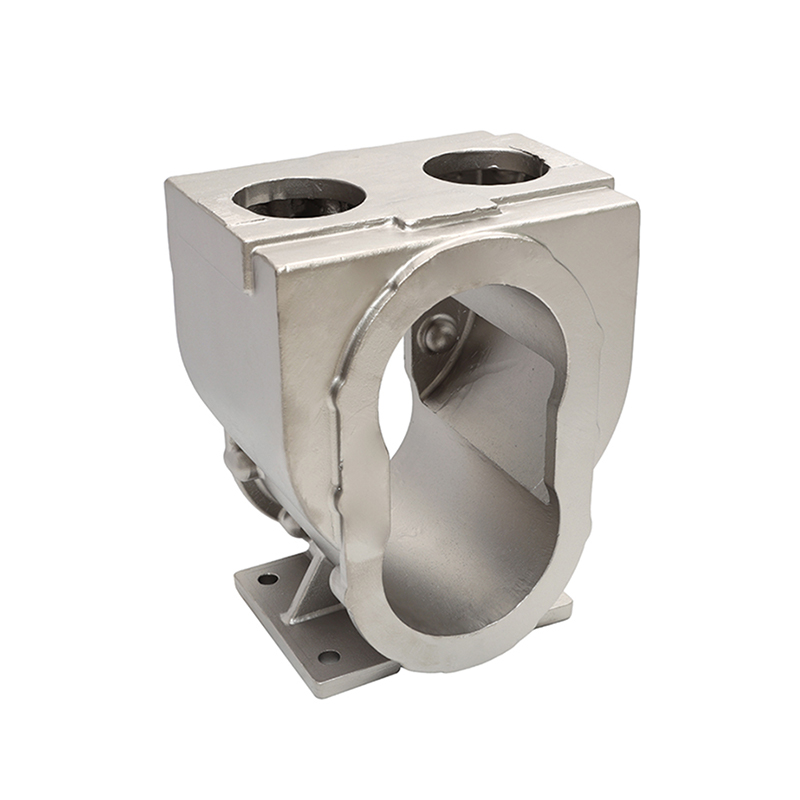
Complex Geometry and Functional Integration
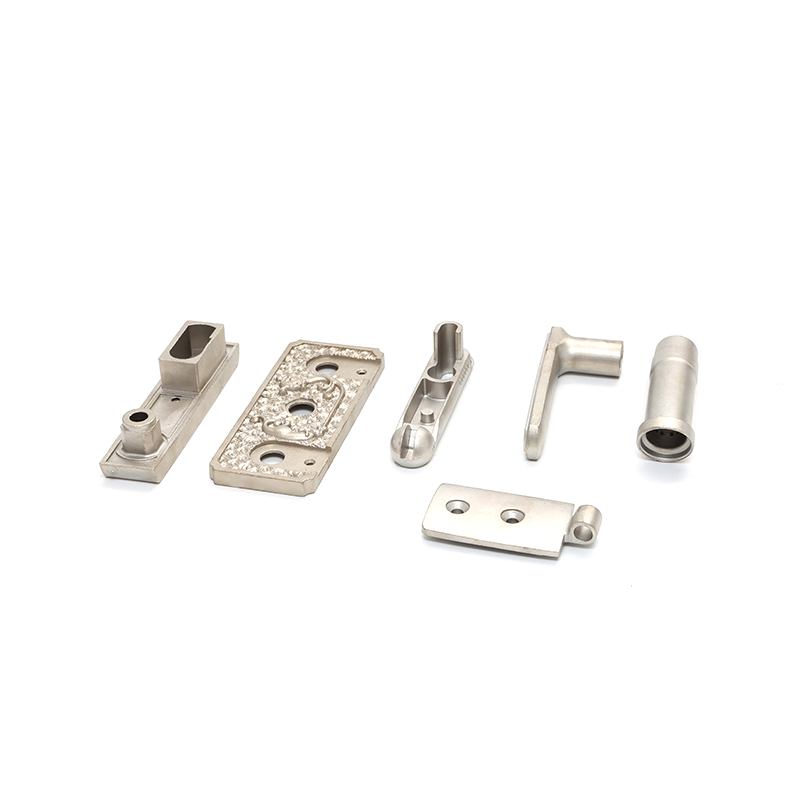
One of the main reasons stainless steel casting is selected lies in its ability to form complex shapes in a single process. Many components used in fluid systems, mechanical assemblies, and industrial equipment contain internal flow paths, mounting bosses, or reinforced sections that would otherwise require multiple machining operations and assembly steps.
By forming these features directly during casting, manufacturers reduce the number of joints, welds, and fasteners required. Fewer connections mean fewer potential failure points, especially in applications involving pressure, vibration, or temperature variation. Integrated geometry also improves dimensional consistency across production batches, supporting easier installation and alignment during assembly.
Design flexibility allows engineers to optimize strength distribution rather than relying on uniform wall thickness. Material can be placed where stress is high, while unnecessary mass is avoided. This approach improves mechanical performance without increasing overall weight, which is especially valuable in rotating or load-bearing components.
Material Properties and Long-Term Reliability
Stainless steel is chosen not only for its strength but also for its resistance to corrosion and surface degradation. In environments exposed to moisture, chemicals, or temperature changes, material stability directly affects service life. Components made through stainless steel casting maintain structural integrity while resisting pitting, scaling, and chemical attack.
Over long operating periods, surface condition plays an important role in performance. Smooth internal surfaces reduce flow resistance and limit areas where deposits can accumulate. This contributes to more stable operation and reduces the likelihood of localized corrosion or blockage.
Thermal stability is another practical advantage. Stainless steel retains mechanical properties across a wide temperature range, allowing cast components to function reliably in both high-temperature and low-temperature applications. This consistency reduces the risk of deformation or cracking caused by thermal cycling.
Manufacturing Control and Quality Assurance
The effectiveness of stainless steel casting depends heavily on process control. Mold design, pouring temperature, and cooling rate all influence final material structure. Poor control can lead to internal defects that weaken performance, even if external dimensions appear acceptable.
To address this, manufacturers focus on inspection and process consistency. Dimensional checks ensure proper fit, while internal inspection methods verify soundness in pressure-bearing or load-bearing areas. These steps help ensure that cast components meet functional requirements before entering service.
Another consideration is material efficiency. Stainless steel casting often incorporates recycled material, which maintains mechanical properties while reducing raw material consumption. Controlled melting and alloy management ensure that the composition remains within specification.
As industrial applications continue to demand components that are durable, precise, and adaptable, stainless steel casting remains a reliable manufacturing method. Its ability to support complex design, stable material performance, and controlled production reinforces the ongoing value of Stainless Steel Casting across a wide range of industrial uses.
FAQ
Q1: Why is stainless steel casting used for complex parts?
It allows internal and external features to be formed in a single component.
Q2: Does casting affect corrosion resistance?
When properly controlled, corrosion resistance is maintained.
Q3: Are cast parts suitable for pressure applications?
Yes, if designed and inspected for pressure conditions.
Q4: How is casting quality ensured?
Through process control, dimensional checks, and internal inspection.

CONTACT INFO
 [email protected]
[email protected] +86-13857761200
 +86-0577-86566777
 No. 199, Baiyu Road, Binhai Park, Wenzhou, Zhejiang, China.
Copyright© Zhejiang Lizhi Metal Products Technology Co., Ltd. All Rights Reserved.

China Stainless Steel Valves