

Call us: +86-13857761200

Email us:[email protected]
 Get a quote

 EN
EN 
 English
 中文简体
中文简体 Español
 русский
Submit feedback
Industry News

How Does a Control Valve Affect Process Stability?
 2026.02.20
 Industry News
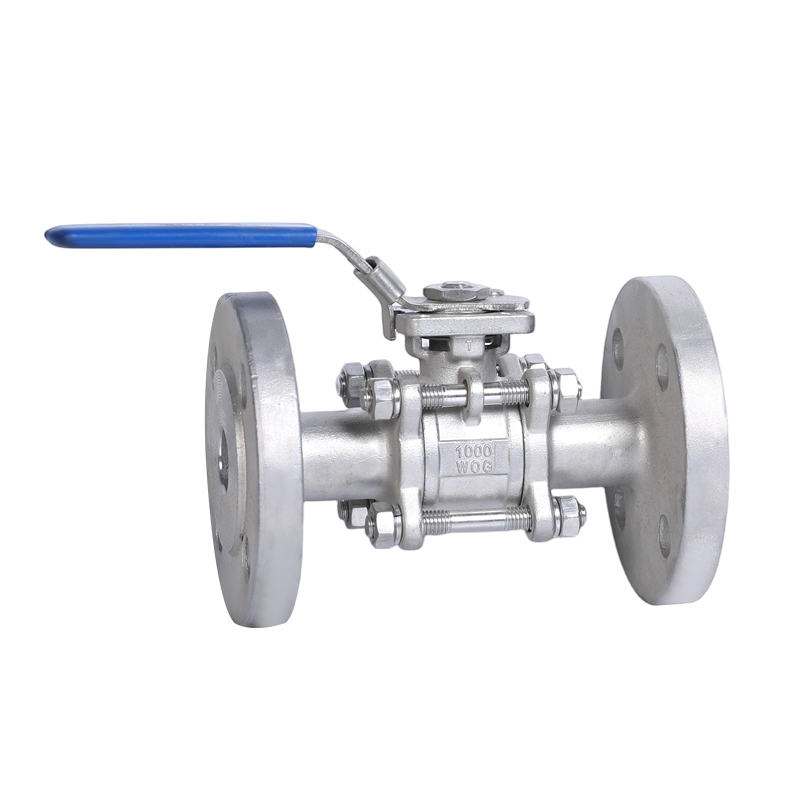
In automated and semi-automated systems, the Control Valve directly influences how smoothly a process operates. Rather than functioning as a simple on–off device, it continuously adjusts flow or pressure to maintain set conditions. Because of this constant movement, its mechanical condition has a measurable impact on system stability.
Operating Behavior and Mechanical Wear
In many applications, a control valve spends most of its service life operating within a limited opening range. Small, frequent adjustments occur as the system responds to changing load or demand. This repeated motion concentrates wear on specific internal areas such as the plug, seat, and stem. Over time, surface contact becomes less uniform, increasing friction and reducing responsiveness.
When friction rises, the valve may hesitate before moving or fail to return precisely to its commanded position. This behavior introduces small deviations that can accumulate into noticeable process fluctuations. Operators often notice unstable flow, pressure oscillation, or delayed response long before visible mechanical damage appears. These early signs are closely linked to internal wear patterns rather than control logic issues.
Fluid quality also affects wear. Particles, deposits, or aggressive media can accelerate surface degradation. Even when damage progresses slowly, it alters how the valve behaves under normal operating conditions, making consistent control more difficult.
Sizing and Selection Effects on Control Accuracy
Valve sizing plays a critical role in long-term performance. An oversized valve typically operates at very low openings, where small stem movements result in large changes in flow. This reduces control resolution and increases sensitivity to friction. Conversely, an undersized valve may operate near its capacity, leaving little margin for adjustment during peak demand.
Proper selection aligns valve capacity with actual process requirements. When sized correctly, the valve operates within a stable range that balances responsiveness and durability. This reduces unnecessary stress on internal components and supports smoother control behavior over time.
Actuator characteristics also matter. The force available to move the valve must overcome friction without causing excessive wear. Matching actuator output to valve design helps ensure consistent positioning without abrupt movement or mechanical shock.
Observation, Monitoring, and Maintenance Practices
Modern maintenance strategies place greater emphasis on observation rather than fixed schedules. Changes in response time, travel consistency, or noise often indicate developing issues inside the valve. Recognizing these signals early allows corrective action before performance deteriorates further.
Simple monitoring tools, such as position feedback or manual stroke checks, can reveal increasing resistance or uneven movement. These observations help maintenance teams focus efforts where they are needed, reducing unnecessary intervention while preventing unexpected failure.
Maintenance itself benefits from targeted action. Cleaning, lubrication, or component replacement performed at the right stage restores function without extensive downtime. This approach supports longer service life and more predictable operation.
As process systems demand greater consistency and efficiency, attention to valve behavior becomes increasingly important. Stable and accurate regulation depends not only on control systems but also on mechanical reliability. Ensuring dependable Control Valve performance remains essential to maintaining steady and controlled process operation.
FAQ
Q1: Why do control valves wear unevenly?
Because they often operate repeatedly within a narrow opening range.
Q2: How does valve size affect control?
Improper sizing reduces accuracy and increases mechanical stress.
Q3: What are early signs of valve performance issues?
Delayed response, unstable flow, or inconsistent positioning.
Q4: Can basic monitoring improve reliability?
Yes, even simple observation helps identify issues early.

CONTACT INFO
 [email protected]
[email protected] +86-13857761200
 +86-0577-86566777
 No. 199, Baiyu Road, Binhai Park, Wenzhou, Zhejiang, China.
Copyright© Zhejiang Lizhi Metal Products Technology Co., Ltd. All Rights Reserved.

China Stainless Steel Valves