

Call us: +86-13857761200

Email us:[email protected]
 Get a quote

 EN
EN 
 English
 中文简体
中文简体 Español
 русский
Submit feedback
Industry News

Y-Type Strainer Protects Critical Pipeline Components
 2026.02.13
 Industry News
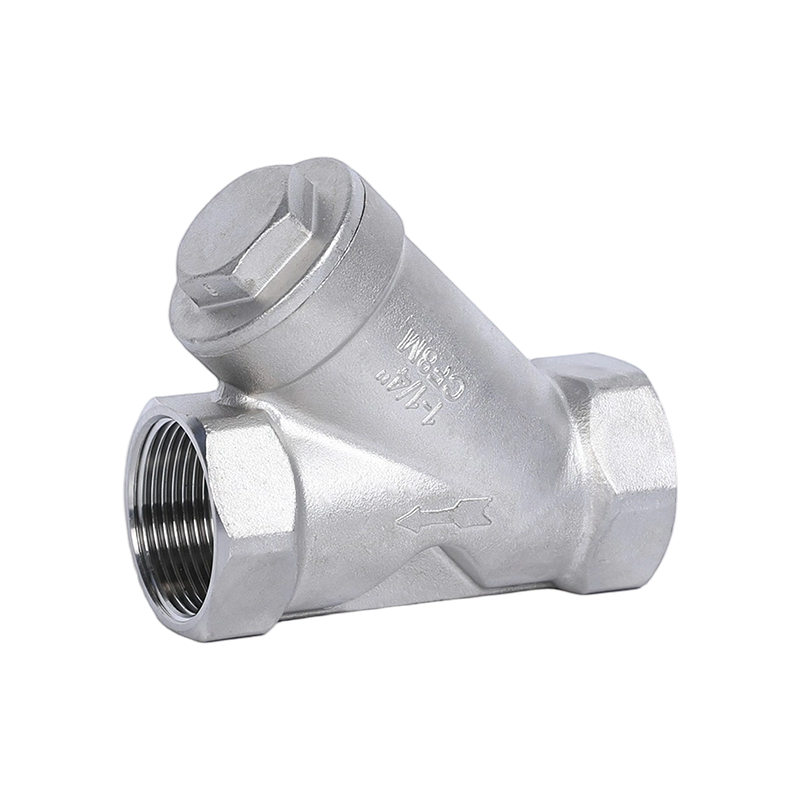
In fluid transport systems, the Y-Type Strainer is widely used as a frontline protective component against solid contamination. While often viewed as a basic accessory, its role becomes critical in systems where debris, scale, or process residue can circulate with the fluid. Without proper filtration, these particles gradually compromise equipment performance and increase maintenance pressure.
Particle Entry and Damage Mechanisms
Solid particles enter pipelines through several practical pathways. During system startup, loose scale or welding residue may be dislodged from pipe walls. Maintenance activities can introduce gasket fragments, sealing materials, or external debris. In open-loop systems, raw water or recycled fluids may already contain sand, rust, or organic matter. Once these particles enter circulation, they travel freely until encountering areas of restriction or mechanical movement.
The common damage occurs at sealing interfaces and rotating or sliding components. Pumps may experience accelerated seal wear, while valves can suffer from scratched seats or obstructed movement. Over time, even small particles can change surface profiles, leading to leakage, unstable flow, or loss of control accuracy. These effects are rarely immediate but accumulate gradually, making early-stage damage difficult to detect without filtration.
By intercepting contaminants before they reach sensitive components, a Y-type strainer interrupts this damage path. Capturing particles upstream reduces abrasive contact and limits the spread of debris throughout the system.
Structural Design and Maintenance Efficiency
The angled body of a Y-type strainer is not only a space-saving feature but also a functional design choice. As fluid flows through the strainer, gravity and flow direction encourage particles to settle into the collection chamber rather than remain suspended. This allows filtration to occur continuously without creating abrupt flow resistance.
Maintenance access is another defining characteristic. Unlike enclosed filtration systems that require full disassembly, the Y-type strainer allows screen removal through a dedicated cap or cover. This design enables targeted cleaning without disturbing surrounding piping. In systems operating under tight schedules, reduced maintenance time directly supports higher availability.
Screen design also matters. The open area ratio, wire thickness, and mesh size determine how effectively particles are captured while maintaining acceptable pressure loss. Selecting an appropriate screen prevents unnecessary restriction and avoids frequent cleaning caused by over-filtration. When matched correctly to process conditions, the strainer operates as a stable protective element rather than a bottleneck.
Long-Term Impact on System Stability
Beyond immediate protection, filtration has a cumulative effect on system stability. When particles are consistently removed, downstream components experience more predictable operating conditions. Flow paths remain cleaner, seals maintain integrity longer, and moving parts encounter less resistance.
Another benefit lies in observation. The debris collected inside a strainer reflects upstream conditions. A sudden increase in particles may indicate internal corrosion, liner degradation, or changes in process quality. Monitoring this accumulation helps operators identify developing issues before they escalate into failures.
Over extended operating periods, systems equipped with effective filtration often show slower performance degradation. Maintenance intervals become more consistent, and unplanned shutdowns occur less frequently. This stability supports not only equipment lifespan but also overall operational planning.
As systems grow more complex and reliability becomes increasingly important, the Y-type strainer serves as more than a passive component. Its ability to manage contamination, simplify maintenance, and support long-term stability reinforces the practical value of the Y-Type Strainer in fluid handling applications.

CONTACT INFO
 [email protected]
[email protected] +86-13857761200
 +86-0577-86566777
 No. 199, Baiyu Road, Binhai Park, Wenzhou, Zhejiang, China.
Copyright© Zhejiang Lizhi Metal Products Technology Co., Ltd. All Rights Reserved.

China Stainless Steel Valves