

Call us: +86-13857761200

Email us:[email protected]
 Get a quote

 EN
EN 
 English
 中文简体
中文简体 Español
 русский
Submit feedback
Industry News

Check Valve and System Safety in Daily Operations
 2026.02.06
 Industry News
In fluid handling systems, the Check Valve plays a quiet but essential role in maintaining stable operation. Whether in water pipelines, industrial circulation loops, or processing equipment, this component prevents reverse flow that can disrupt performance and damage connected machinery. As operating conditions become more demanding, attention has shifted toward how these valves behave under real working pressure rather than ideal design assumptions.
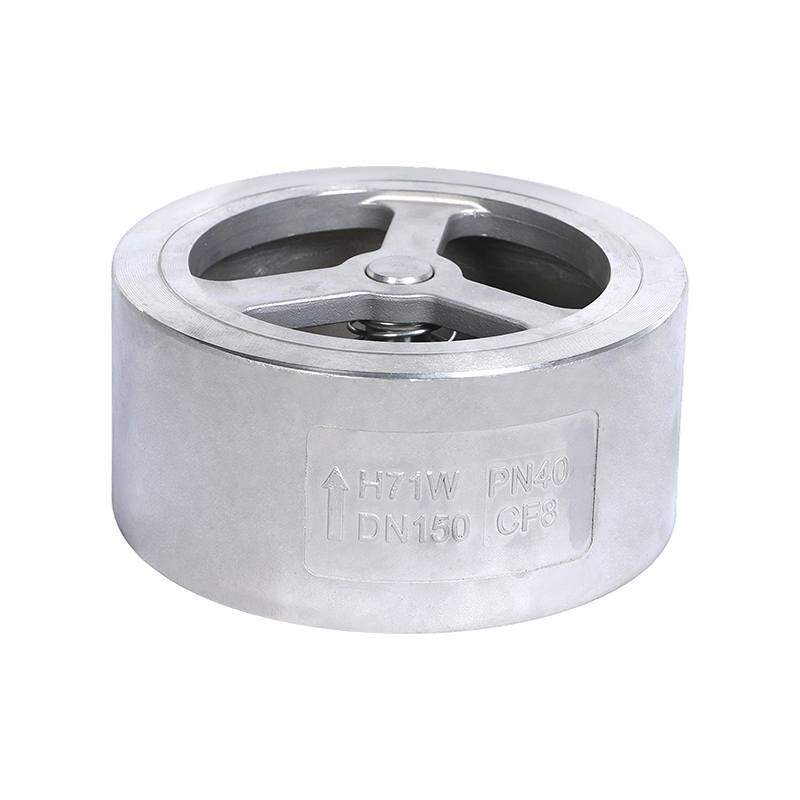
Backflow events often occur during sudden pump shutdowns or unexpected pressure fluctuations within a fluid system. When the direction of flow reverses, even briefly, it can create abnormal forces inside the pipeline. These forces place additional stress on seals, bearings, and internal surfaces that are normally designed to handle unidirectional flow. Over time, this stress can alter surface alignment, increase friction, and reduce the effectiveness of sealing components, particularly in systems that operate continuously or under variable load conditions.
Even short-duration reverse flow has been associated with accelerated wear in pumps, valves, and connected piping. In many facilities, maintenance teams notice that components exposed to frequent backflow require adjustment or replacement more often than expected. Repeated incidents can lead to vibration, noise, and gradual efficiency loss, which in turn increases repair frequency and extends downtime. As these issues accumulate, they can affect overall system reliability and raise operational costs, making backflow prevention an important consideration in daily operation and maintenance planning.
Valve closure behavior is a key factor in this discussion. If a valve closes too slowly, reverse flow may already have caused impact. If it closes too abruptly, pressure shock can occur. Balancing these forces is not only a design concern but also an operational one. Engineers now place more emphasis on matching valve characteristics with actual system dynamics, including flow rate variation and pressure range.
Material condition is another practical consideration. Over time, corrosion, scale, or debris accumulation can interfere with proper sealing. In systems carrying aggressive fluids or suspended solids, internal surfaces are exposed to constant stress. Regular inspection often reveals that even small surface imperfections can affect performance. As a result, operators increasingly include valve condition checks as part of routine system reviews.
Installation practices also influence performance. Orientation, spacing, and accessibility affect how easily a valve can respond and be maintained. Valves installed without adequate upstream or downstream clearance may experience unstable flow patterns, reducing efficiency. Adjustments made during installation have helped some systems reduce vibration and noise while improving operational consistency.
Maintenance planning has shifted toward prevention rather than response. Instead of replacing valves only after failure, many facilities now track operating cycles and pressure behavior to anticipate wear. This approach has reduced unexpected interruptions and improved overall system reliability without increasing maintenance workload.
Although the check valve is often treated as a standard component, its impact on system protection is significant. Proper selection, installation, and monitoring help ensure that fluid systems operate smoothly over time. As operational demands continue to evolve, the importance of a reliable Check Valve remains central to safe and consistent flow control.
FAQ
Q1: What is the main function of a check valve?
It prevents fluid from flowing backward in a system.
Q2: Can backflow damage equipment?
Yes, repeated backflow can increase wear and lead to mechanical issues.
Q3: Does valve orientation matter?
Correct orientation supports stable operation and easier maintenance.

CONTACT INFO
 [email protected]
[email protected] +86-13857761200
 +86-0577-86566777
 No. 199, Baiyu Road, Binhai Park, Wenzhou, Zhejiang, China.
Copyright© Zhejiang Lizhi Metal Products Technology Co., Ltd. All Rights Reserved.

China Stainless Steel Valves